 Image 1 of 2
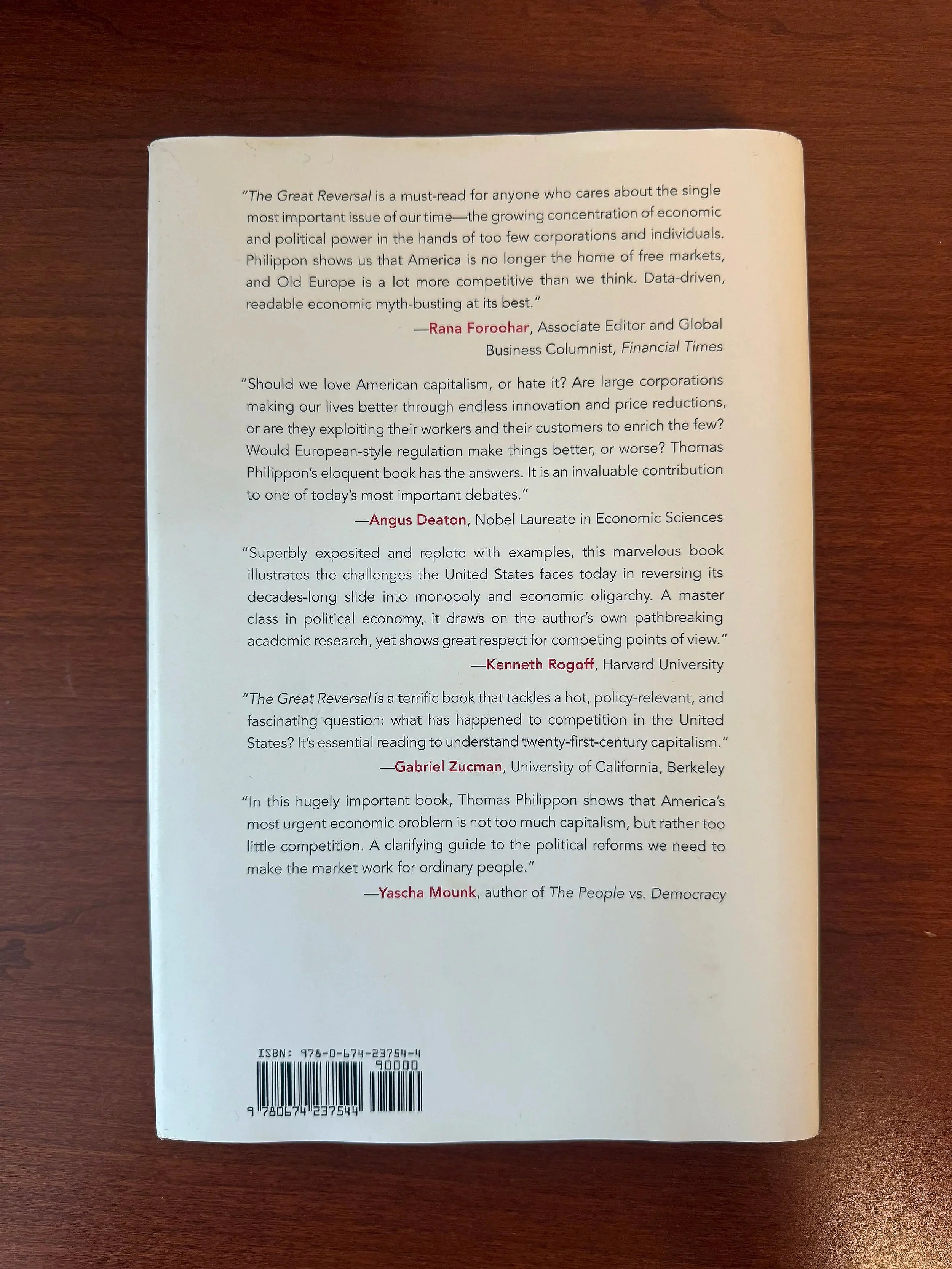 Image 2 of 2
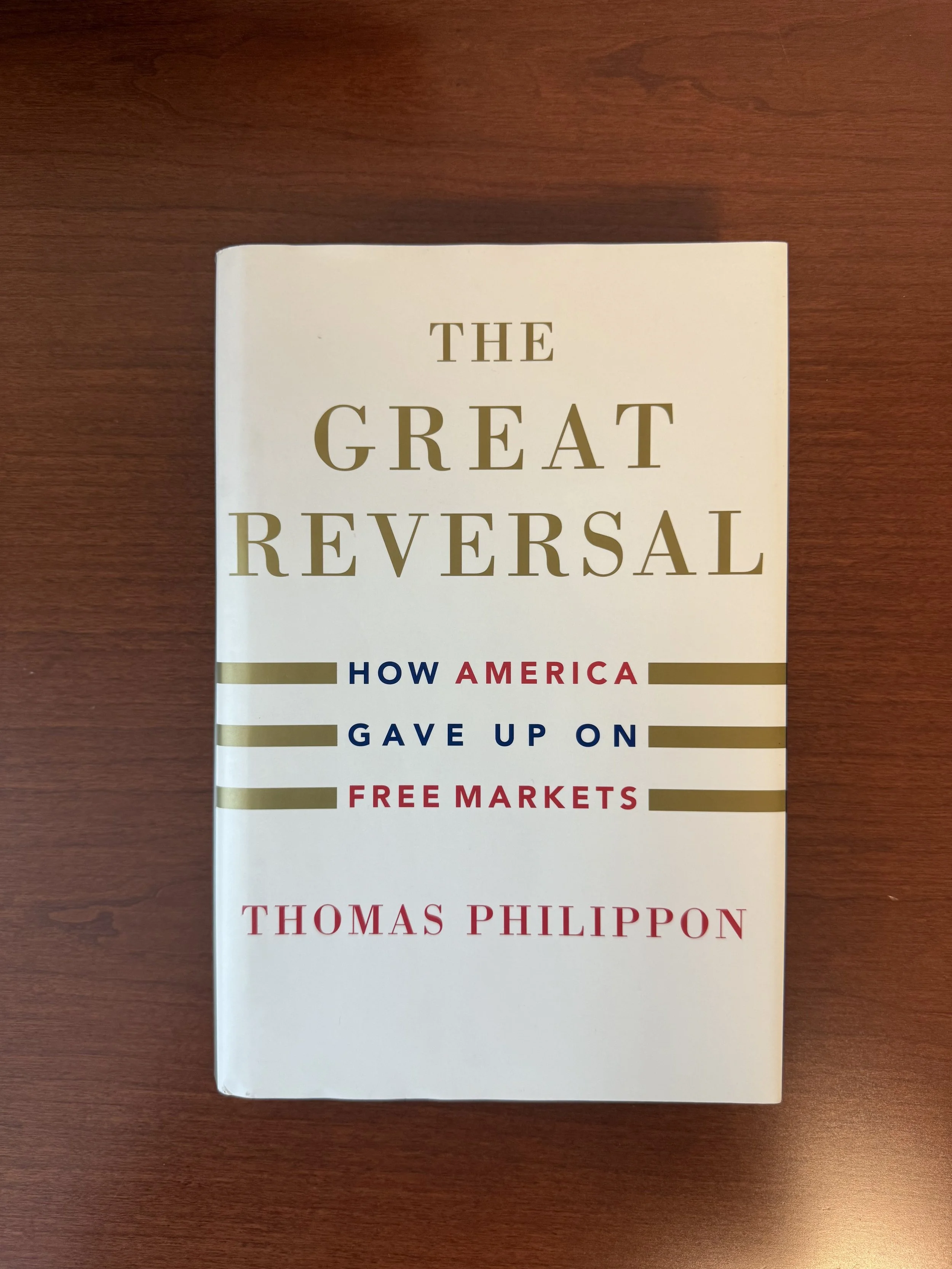
The Great Reversal by Thomas Philippon is a sharp, data‑driven exploration of how the United States—once a global champion of competition—slowly drifted toward concentrated corporate power. Philippon traces the policy choices, regulatory shifts, and market dynamics that allowed industries to consolidate, prices to rise, and innovation to stagnate. Clear, compelling, and rigorously argued, the book challenges readers to rethink what a truly competitive economy should look like. A standout pick for anyone interested in economics, public policy, or the future of American markets.
Michael’s Review: Thomas Philippon undersells the contributions modern technology companies have made to the U.S. economy. Nonetheless, he convincingly argues that these companies do not generate the same level of broad societal benefits as their forerunners did. For example, he highlights that these companies employ fewer individuals than the historically leading U.S. companies (e.g., General Electric). While employing fewer individuals is economically efficient, Philippon notes that this means these companies directly employ fewer people.
Michael’s Rating: 3/5 Stars
The Great Reversal by Thomas Philippon is a sharp, data‑driven exploration of how the United States—once a global champion of competition—slowly drifted toward concentrated corporate power. Philippon traces the policy choices, regulatory shifts, and market dynamics that allowed industries to consolidate, prices to rise, and innovation to stagnate. Clear, compelling, and rigorously argued, the book challenges readers to rethink what a truly competitive economy should look like. A standout pick for anyone interested in economics, public policy, or the future of American markets.
Michael’s Review: Thomas Philippon undersells the contributions modern technology companies have made to the U.S. economy. Nonetheless, he convincingly argues that these companies do not generate the same level of broad societal benefits as their forerunners did. For example, he highlights that these companies employ fewer individuals than the historically leading U.S. companies (e.g., General Electric). While employing fewer individuals is economically efficient, Philippon notes that this means these companies directly employ fewer people.
Michael’s Rating: 3/5 Stars